
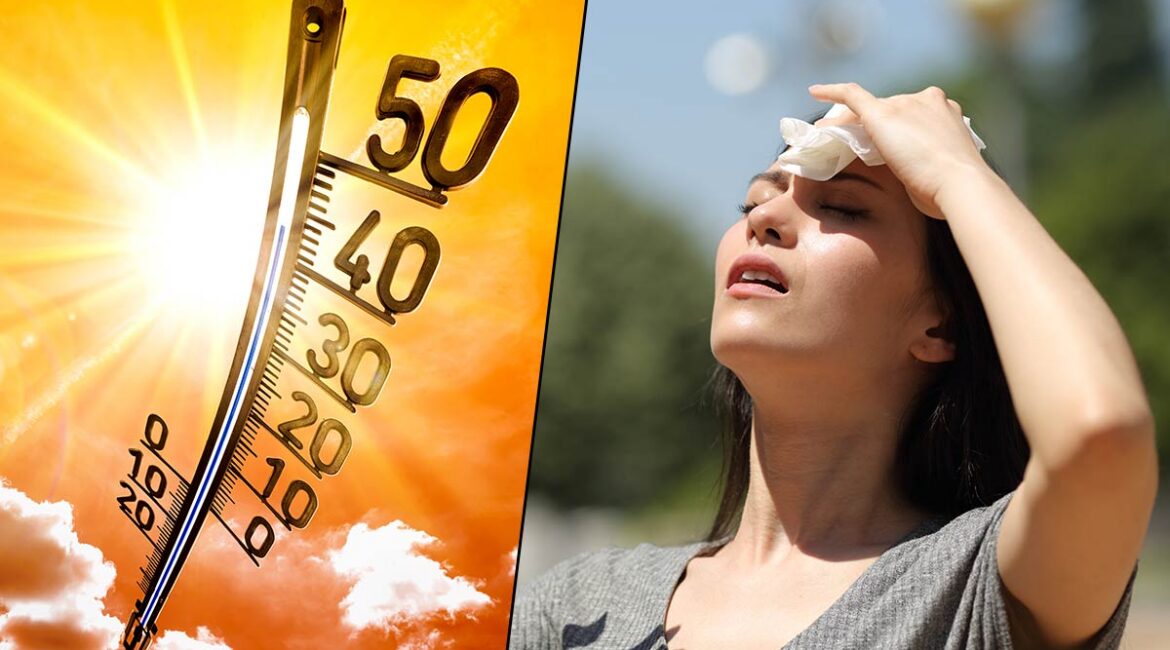
Although the northern summer can sometimes feel short, climate change and global warming have made sudden, intense heatwaves more frequent here too. Because true summer weather is rare, people want to make the most of it – often forgetting that excessive sun and heat place a heavy burden on the body.
Now is a good time to become informed about heatstroke, because once the hot weather arrives there is little time left for it. Heat-related health problems creep up unnoticed. Our clinic’s doctors and nurses explain how to distinguish heat cramps, heat exhaustion and life-threatening heatstroke, how to recognise dehydration and how to give first aid correctly.
🌡️ Three Stages of Overheating: From Cramps to a Life-Threatening Condition
The human body warms up in high external temperatures, which triggers sweating to cool down. But if we do not replace the loss of fluid and salts, the body can no longer cool itself. Overheating is divided into three stages:
1. Heat cramps (body temperature 37–39 °C)
The body’s cooling mechanisms are still working, but heavy sweating has caused a deficit of fluid and salts (electrolytes).
- How to recognise it: Painful cramps lasting 1–3 minutes in heavily used muscles (calves, arm or abdominal muscles). They often occur when only plain water is consumed in the heat, which dilutes the body’s salts even further.
- First aid: Drink beverages containing electrolytes (mineral water, pharmacy electrolyte solutions) and take a painkiller if needed. Medical intervention is generally not required.
2. Heat exhaustion (body temperature below 40 °C)
A more serious condition that requires quick intervention. If the person cannot be cooled down within 30 minutes, heat exhaustion can develop into life-threatening heatstroke.
3. Heatstroke (body temperature above 42 °C) – LIFE-THREATENING!
Extreme heat causes central nervous system dysfunction and the body’s thermoregulation stops working completely. This is a critical condition with a mortality rate of 21–63% according to various studies. The risk of death is higher the longer the body temperature has been elevated and the more organ systems are damaged.
👥 Who Is at Greatest Risk?
Heatstroke affects at-risk groups faster and more severely. Those at risk include:
- Infants and young children, the elderly, pregnant women.
- Overweight people and those in poor physical condition.
- People whose home has no air conditioning or who are in a lower socioeconomic situation.
- People who use narcotics or the everyday medication groups listed below.
Medicine distinguishes two types of heatstroke:
- Exertional heatstroke: Usually occurs in young, healthy people (athletes, soldiers, construction workers) who do heavy physical work or training directly in the heat.
- Classic heatstroke: Occurs in patients with a chronic illness that disrupts thermoregulation, reduces the sensation of thirst, or prevents the patient from leaving the environment independently.
🧠 How Do Illnesses Interfere with the Brain’s “Thermostat”?
- High blood pressure and heart disease: In the heat, blood vessels dilate to release heat, which in patients with high blood pressure can lead to a dangerous, sharp drop in blood pressure and poor blood supply.
- Neurological diseases (Parkinson’s disease, multiple sclerosis (MS), stroke, dementia): Because the body’s main temperature centre is in the brain, nervous system diseases impair the body’s ability to sense heat and transmit cooling commands (such as sweating). For example, in people with MS even a minimal rise in body temperature can block nerve signals and temporarily worsen symptoms (Uhthoff’s phenomenon). People with dementia may not feel thirst or realise they should remove excess clothing.
- Psychiatric illnesses (schizophrenia, bipolar disorder, severe depression): During serious episodes a patient’s sense of reality and safety may be impaired, causing them to forget to drink water or to stay in direct sun for hours. In addition, certain illnesses such as schizophrenia can directly affect the brain’s internal temperature-regulation ability.
💊 Why Do Ordinary Medicines Become Dangerous in the Heat?
- Diuretics (water tablets): Intensively flush fluid from the body, which combined with heat multiplies the risk of dangerous dehydration.
- Anticholinergic medicines: Widely used to treat overactive bladder, asthma/COPD, Parkinson’s disease, allergies (antihistamines) or gastrointestinal cramps. These medicines suppress sweat production. Since sweating is a person’s only way to cool down in the heat, users of these medicines can have their body temperature rise at a life-threatening rate without sweating.
- Sympathomimetics: These include over-the-counter nasal sprays (xylometazoline, etc.; active ingredients such as xylometazoline or oxymetazoline, brands like Sudafed, Xymelin, Otrivin), hot cold-relief drinks and tablets (pseudoephedrine), some asthma medicines and OTC remedies. These substances stimulate the body’s “fight or flight” system, which raises the body’s internal energy (the heart beats faster and produces more heat) while narrowing the blood vessels under the skin, trapping heat in the body.
- Salicylates (especially aspirin and combination painkillers): In higher doses (e.g. to relieve severe pain) these substances can accelerate intracellular metabolism, during which cells begin to release energy as pure internal heat, forcing the body to overheat from within.
- Psychotropic medicines (antipsychotics, often also antidepressants and lithium): Antipsychotics interfere with the dopamine receptors of the hypothalamus that regulate the body’s internal thermostat, suppressing sweating and increasing the risk of heatstroke. In patients on lithium therapy, the fluid loss caused by heat can raise the drug’s blood concentration to life-threatening lithium-poisoning levels.
Warning: If you take daily prescription medicines prescribed by a doctor (e.g. cardiac aspirin, blood-pressure, neurological or psychiatric medicines), you must not stop or change your treatment on your own in the summer. However, in hot weather take special care to drink enough fluids and to cool down, and consult our team if you have any concerns.
🚨 Symptoms: How to Recognise Overheating?
The first symptoms of heatstroke are sweating, headache, strong palpitations and dehydration. The pulse can speed up to 160–180 beats per minute and shortness of breath develops. If these signs are not addressed immediately, the condition worsens rapidly: the skin becomes dry and cool (the body can no longer sweat), ringing in the ears occurs, along with dizziness, vomiting, weakness, fainting and ultimately death from cerebral oedema.
How to Recognise Dangerous Dehydration?
In young children:
- Dry mouth, dry lips and tongue
- Sunken cheeks or a sunken fontanelle (soft spot) on the head
- The child has not urinated for 3–4 hours
- No tears when crying
- Rapid irritability or, conversely, unusual lethargy
In adults:
- Strong thirst and exhaustion
- Dizziness and confusion
- A reduced need to go to the toilet
- Urine becomes noticeably dark
🚑 First Aid: Act Quickly!
If heatstroke is suspected, every minute counts:
- Move the person immediately into a cool room or shade.
- Free them from excess clothing.
- Start active cooling: Move air (fan, ventilation) and place cold compresses on areas where large blood vessels are close to the skin: the head, neck, armpits and groin. Note: Cooling must continue until body temperature drops to 38 degrees.
- Give cool water to drink: If the person is conscious, give them plenty of mineral water to restore the salt balance.
- Monitor consciousness: If the person loses consciousness or vomits, turn them into the recovery position and keep the airways clear. Protect a person having convulsions from injuring themselves, and afterwards also place them on their side.
📞 When to Call 112 and an Ambulance?
Call an ambulance immediately if:
- Despite cooling and first aid, the condition has not improved within 30–60 minutes or is worsening.
- The person is not sweating but body temperature keeps rising.
- Body temperature is above 39 °C.
- There is a breathing disturbance (shallow, rapid breathing, more than 25 times per minute).
- A seizure or altered consciousness occurs (the person is confused, cannot be woken, or does not respond to pain).
🛡️ Prevention: 12 Golden Rules for Summer
So that summer passes without worry, follow our medics’ simple recommendations:
- Calculate your water needs: On a hot day an adult needs 28–35 ml of water per kilogram of body weight (e.g. a 60 kg person should drink about 2 litres). Children’s fluid needs are even higher depending on age: 40–150 ml/kg (e.g. a 40 kg schoolchild also needs at least 2 litres).
- Drink preventively: Drink often in small sips, and always take a water bottle with you when leaving home. Keep a water bottle on the table or within reach at all times. If needed, set a reminder/alarm on your phone to drink water every hour.
- Avoid alcohol: Alcohol is a diuretic, i.e. it promotes rapid fluid loss from the body, multiplying the risk of overheating. Alcohol suppresses the production of antidiuretic hormone (ADH), accelerating fluid loss through the kidneys.
- Plan your time: Be outdoors outside the peak sun hours. Between 12:00 and 17:00, prefer to be in the shade or in a cool indoor space.
- Protect your heart: Patients with high blood pressure should avoid exercising in the heat – workouts should be moved to early morning or late evening. With chronic illnesses it is worth consulting our clinic’s duty nurse or doctor in advance.
- Breaks for workers: People working outdoors should take a rest break in a cool place (e.g. an air-conditioned room or car) every couple of hours.
- Cooling the room: At home, put covers over sun-facing windows and ventilate rooms mainly during the cooler morning and evening hours.
- ⚠️ A deadly car trap: Never leave a child, an elderly person or a pet in a car in hot weather – not for a single second! In a closed car a greenhouse effect develops within minutes, raising the temperature to life-threatening levels. Research shows that a car’s interior temperature can rise to dangerous levels in just 15–20 minutes, even when it is only 21 °C outside.
- Protect a baby in a pram: Never cover the opening of a pram with cloth (not even thin gauze), as this turns the pram into a stuffy oven. Use a special canopy/sunshade extension and keep the pram in the shade. Covering a pram with cloth blocks air circulation and raises the interior temperature by nearly 10 degrees in a short time.
- Don’t sleep in the sun: Falling asleep in the sun ends in a severe burn.
- Apply sunscreen early: Apply sunscreen before going outside – burned skin loses its ability to cool itself effectively by sweating. Severe sunburn damages the skin’s surface blood vessels and sweat glands, hindering the body’s normal thermoregulation and heat release.
- Dress appropriately: Wear light-coloured, thin and breathable clothing, and be sure to wear a head covering.
🩺 Worried About Your Health Indicators or Summer Treatment Plan?
If you have a chronic illness, take blood-pressure medicines, or want to check your own or your child’s health indicators after a heat period, book an appointment for a consultation with our family doctor or nurse. We are here for you in summer too!
Additional sources:
Centers for Disease Control and Prevention (CDC). Alcohol and Hot Weather Risk. · McLaren, C., et al. (2005). Heat Stress From Enclosed Vehicles. Pediatrics. · Ericson, S. (2014). Sunderby Hospital Study on Stroller Overheating. · Mayo Clinic. Sunburn and thermoregulation. · Cheshire, W. P. (2021). Autonomic insufficiency and the effects of heat on neurological disorders. The Lancet Neurology. · Martin-Latry, K., et al. (2007). Psychotropic drugs with anticholinergic properties and heat-related illness in the elderly during a heatwave. British Journal of Clinical Pharmacology. · Cheshire, W. P. (2016). Thermoregulation disorders and drug-induced hyperthermia. Autonomic Neuroscience. · Westaway, K. P., et al. (2019). Medicines and heat: A guide for primary care professionals. Australian Journal of General Practice. · Proudfoot, A. T. (2003). Toxicity of Salicylates. Medicine.
